Cutting technology · Oxy-fuel
CAD/CAM software for oxy-fuel and flame cutting machines.
Flame cutting including heavy plate: thickness is limited by the machine, not the software. Synchronised multi-head cutting, preheat strategies and an optimised cutting sequence. For Messer, ESAB, Koike, Zinser and others.
Quick answer
FiNest covers the full range of oxy-fuel (flame) cutting, from single-torch machines to extensive multi-head setups, including heavy plate with no thickness limit on the software side. Post-processors are available for Messer, ESAB, Koike, Zinser, MicroStep and Eckert, among others. Key features: synchronised multi-head cutting with zone splitting, automatic preheat strategies for each material and thickness, an optimised cutting sequence against distortion, and powder marking and centre punching in the same NC program.
Background: Laser, plasma, oxy-fuel or waterjet: cutting processes compared
When it fits
When your flame cutting machine is productive but programming holds it back
- An older control with its own NC dialect that needs a tailored post-processor
- Several torches, but parts are not distributed well, so the machine runs below capacity
- Preheat and pierce settings rely on experience, and know-how is lost when a programmer leaves
- Marking and punching are programmed separately from cutting, doubling the effort
- Steel construction or shipbuilding with high tonnage, looking for efficiency gains
- A retrofit project: an older machine should stay productive with modern software
What FiNest offers for oxy-fuel cutting
Synchronised multi-head cutting
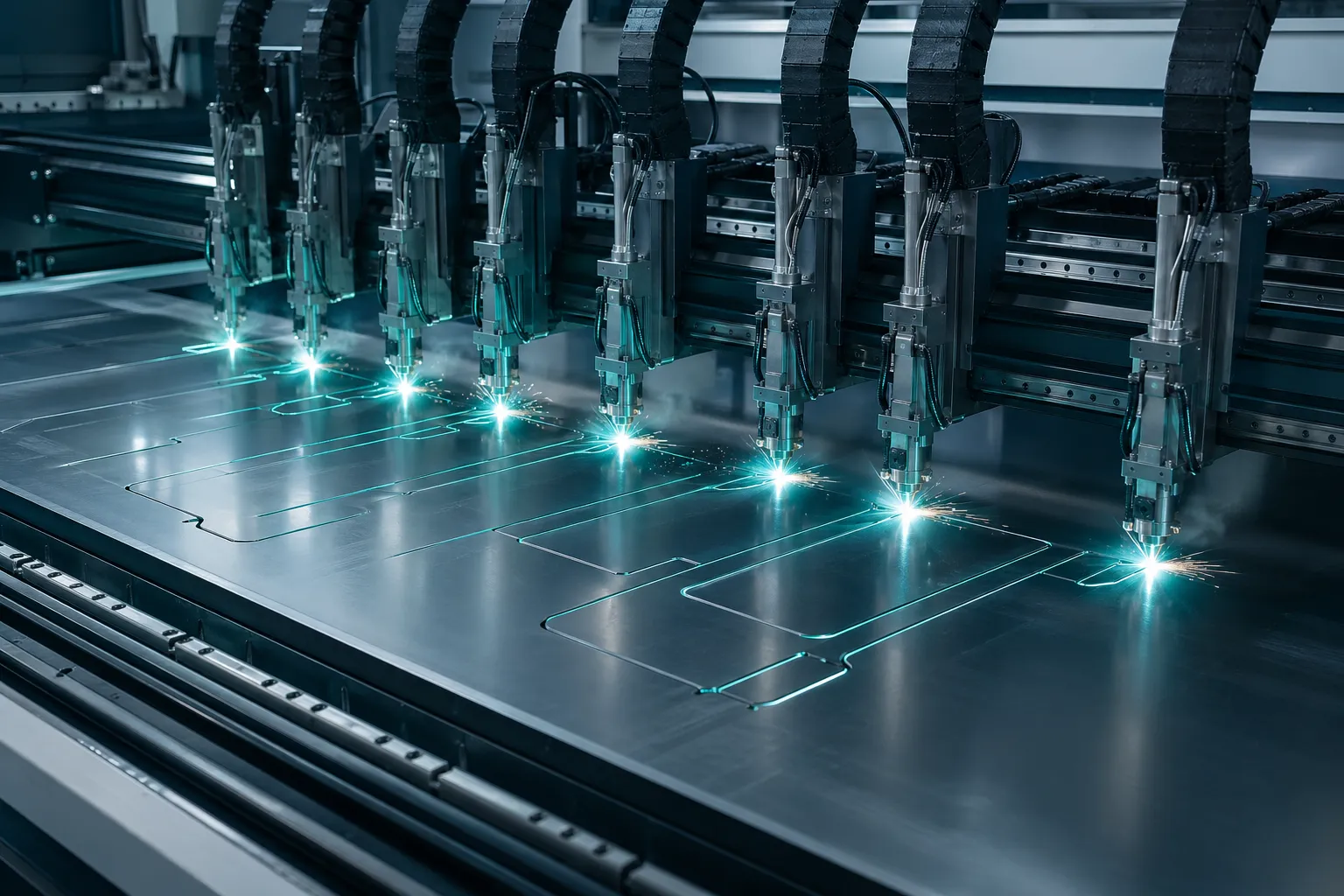
Multi-head cutting with zone splitting and automatic collision avoidance for higher throughput on large parts.
Preheat strategies
Preheat time is calculated automatically from material, thickness and cutting parameters, reducing pierce problems on thick plate.
Heavy plate without a software thickness limit
Optimised for thick steel plate and heavy plate. Material thickness is limited by the machine, not by the software. Customers cut very thick plate for steel construction, shipbuilding and heavy vehicle fabrication.
Thermal cutting sequence
The optimised machining sequence takes heat distribution into account. Pierce-first with pause cycles prevents distortion on slender parts.
Powder marking and centre punching
Marking with the torch itself, either powder marking or punch marks for later drilling, all in one NC program.
Optimised pierce logic
Pierce points are adapted to material thickness and torch configuration, with configurable preheat hold and oxygen pressure profile.
Supported machines
Post-processors for these flame cutting machines, among others
Focused on steel construction, shipbuilding and heavy plate processing. Post-processors for special machines are developed after a specification session.
Oxy-fuel cutting in brief
In oxy-fuel or flame cutting, a fuel gas and oxygen flame heats the steel to ignition temperature. A jet of cutting oxygen then burns the iron to oxide and blows the slag out of the kerf. Because the material burns rather than just melts, the process suits mild and low-alloy structural steel, but not stainless steel or aluminium.
Its strength is thick plate: the thicker the material, the more likely oxy-fuel is to be more economical than plasma, and the achievable thickness goes far beyond the usual plasma limits. On thin sheet, however, the process is slow and puts a lot of heat into the part. That is why many flame cutting machines carry both an oxy-fuel and a plasma unit on the same gantry, and the software has to handle both technologies in one job. See cutting processes compared.
What matters in software for flame cutting machines
- Several torches at once: Large gantry machines cut with several torches in parallel. The software distributes the parts to the heads, keeps the torch spacing and avoids collisions.
- Piercing and preheating: On thick plate, the pierce decides process reliability. Preheat time, pierce delay and pierce position have to suit the material and thickness, ideally taken from a technology database.
- Cutting sequence against distortion: The high heat input distorts slender parts. Cutting inner contours first, piercing in advance and a well-planned sequence keep the parts dimensionally accurate.
- Bevels for the weld seam: In steel construction and shipbuilding, edges are often bevelled during cutting. See bevel cutting software.
- Marking and punching: Scribe lines, hole patterns and part numbers belong in the same NC program, so parts can be processed further after cutting without a drawing.
- Steel construction data: Parts from Tekla or Advance Steel arrive as DSTV files with holes, markings and bevels.
- The right post-processor: Flame cutting machines often run for decades, with older or maker-specific controls. The post-processor has to serve exactly that control.
FiNest nests the parts with the same nesting software used for laser, plasma and waterjet, including remnants from stock.
Frequently asked questions
What is the maximum material thickness for oxy-fuel cutting with FiNest?
How does multi-torch control work?
How does FiNest support preheating?
Can we cut and mark in one program?
See it with your machine.
Live demo with your own parts, matched to your machine and control. 30–60 minutes, online or on site.